

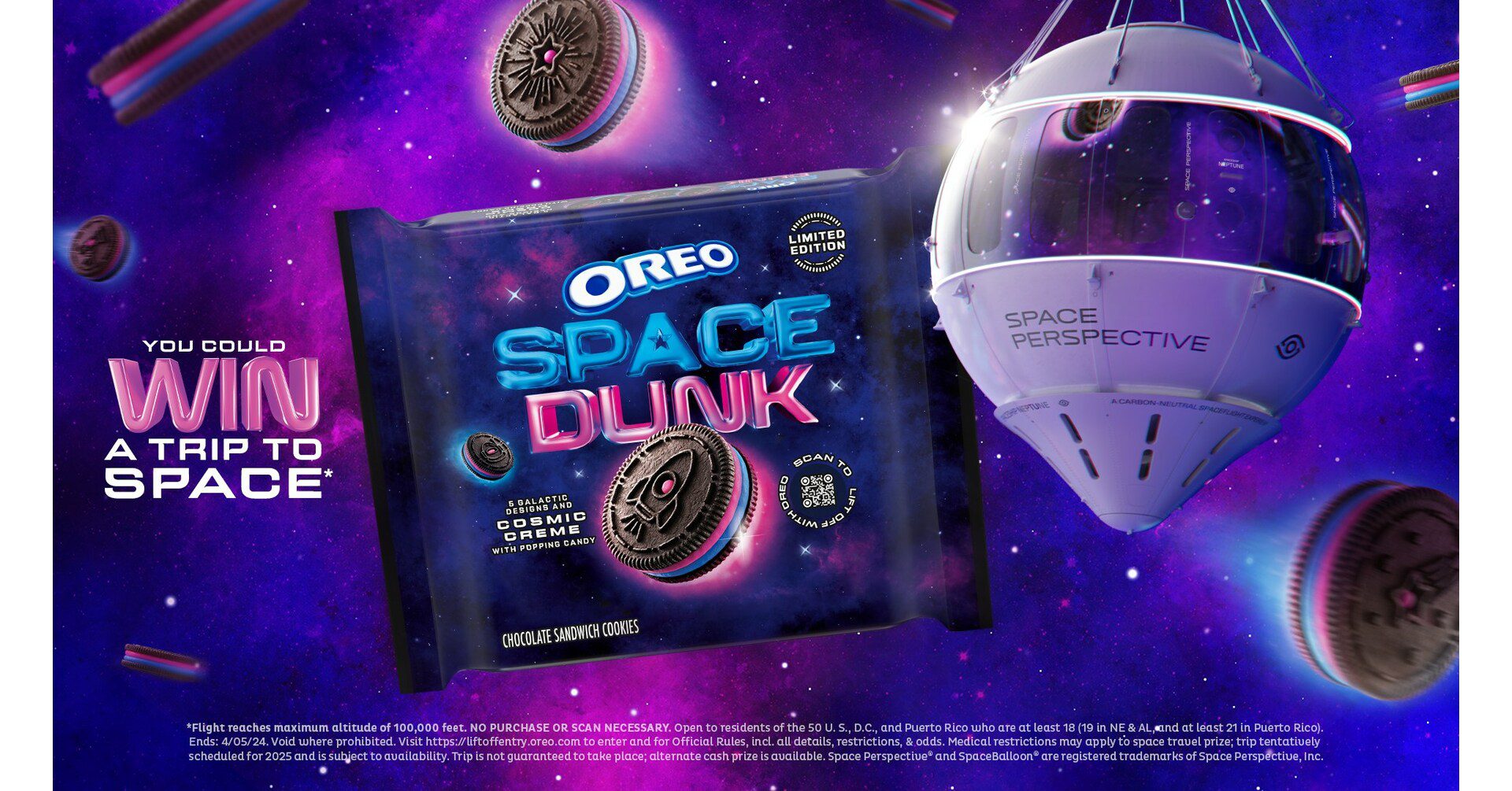
A month after the Texas Lottery launched its $1,000,000 Cash Blast game, complete with a chance to fly to the edge of space with Space Perspective, Mondelez International, Inc. made a splash with the introduction of OREO® Space Dunk Cookies. This limited-edition flavor offers consumers a totally different way to win a Space Perspective trip. The new Oreos were so popular they sold out nationwide even before reaching store shelves, proof positive that the offered chance to win a trip to space was enticing enough for consumers to buy every box without even taking the time to taste them. And if any of those consumers weren’t interested in buying a box, they could always enter the promotion without a requirement to buy one. This begs the question: How do “no purchase necessary” promotions like these affect lottery industry offerings?
Space Dunk Oreos are unlikely to have negatively affected Texas’ Cash Blast ticket sales. The sales channels are far too unique to suffer too much crossover spend. But the pandemic showed that entertainment options and consumer spend for them—once considered somewhat independent from lottery products—can indeed pose a competitive threat as illustrated by the fact that lottery sales increased substantially when entertainment options were dramatically curtailed during the Covid crisis. Private companies’ game-of-chance promotions similarly enhance their products’ entertainment value, adding a new layer of appeal to existing products and services. Now, with inflation shrinking discretionary income, consumers may be enticed more than ever to shift spending away from lottery games and value-added promotions toward these free offer alternatives.
Mondelez is not alone in running high-profile game-of-chance promotions. Companies like Kellogg’s, McDonald’s, and Starbucks also conduct large giveaway promotions on a regular basis. Further, most lotteries can’t match the marketing budgets of billion-dollar corporations. However, this potential competition presents an opportunity for lotteries to learn from these corporate offerings, leverage existing advantages, and strategically enhance lottery promotions and prize offerings.
“These companies are enticing consumers to participate, promoting their products effectively, and structuring their prize packages in innovative ways,” Jeffrey Schweig, President of Alchemy3, emphasizes. “We’re now running various programs that include ancillary prizes and experiential prizes, but we must carefully observe how our private sector counterparts offer high-value prizes and find ways to distinguish ourselves with content and prizing that adds even more value for the lottery buck.”
By paying close attention to private companies’ “no purchase necessary” promotional strategies, lotteries can find ways to regain their edge. If companies incorporate games of chance for added value, lotteries could enhance their offerings by creating more tangible experiences associated with the purchase of a lottery game. Schweig suggests finding ways to leverage inherent features for brands, for example, through gamification. Pointing to Alchemy3’s Dogs Playing Poker property, Schweig says having the ability to actually “play poker” in an interactive experience as an added-value overlay with a Dogs Playing Poker scratch game increases the appeal and delivers more value for dollar spent by the player. Enhancing featured tickets in this manner can be a powerful tool to boost engagement and add more tangible value to the core lottery game.
The “No Purchase Necessary” Difference
Of course, one important point of differentiation private companies are required to deal with—and that they have successfully turned to their advantage—is that they must offer “for free” entry mechanisms to their promotions. Any game-of-chance promotion private companies offer, including McDonald’s Monopoly game, must provide an option for players to enter without buying anything. Alchemy3 has been examining this difference closely and exploring new ways to add free elements to their prize packages to entice consumers.
“Free” promotional overlays might not boost immediate profits for lotteries, but they can encourage non-players to engage with the lottery, thereby increasing future revenue potential. “Lotteries should run programs that familiarize consumers with the lottery and its offerings. Think about that younger, just-out-of-college demographic. They’re in entry-level jobs with student debt. They have other priorities than purchasing a $10 instant lottery ticket. This will all change as they get older and have more discretionary income. When they do have discretionary dollars to spend in the future, familiarity with the lottery and its offerings will make them more likely to participate,” Schweig says. “So it’s as important as ever to encourage trial and participation early on.” With this theory in mind, Alchemy3 developed fun and engaging free entry promotions around their Bass Pro Shops and Omaha Steaks licenses.
For Bass Pro Shops, Alchemy3 works closely with lotteries to add value and encourage trial through social media promotions, like “Kiss Your Catch.” Players are encouraged to post a picture with their recently caught fish, giving them a chance to win a Bass Pro Shops gift card without a requirement to purchase a Bass Pro Shops ticket.
Similarly, for the Kentucky Lottery’s recent Omaha Steaks $5 Grillin’ & Chillin’ game, the Lottery offered easily redeemed discount codes for purchases at Omaha Steaks through a microsite. The promotion did not require a purchase to enter. Players could save 40% or more on select meat packages with lottery-themed names like “Quick Pick Party Pack” and “Mouthwatering Millions.” The tickets sold out by the seventh week despite minimal advertising.
Lotteries will always face challenges in competing with the marketing power of billion-dollar corporations. However, this competition presents an opportunity to innovate. By observing private sector strategies, Alchemy3 is finding new opportunities and adapting its programs to offer lotteries more robust licensing packages. These value-added, “no purchase required” options help distinguish a lottery’s games from competitors while attracting younger audiences and non-players. These promotions resonate with consumers and keep players engaged and loyal.