


Scientific Games is energizing its next era with new people and products, building upon the company’s success in its global lottery systems business and adding value for customers. The latest addition of experts is Mike Cardell, Scientific Games Senior VP of Americas Systems. Cardell most recently served as VP and General Manager of Next-Generation Solutions at Fiserv, where he managed the modernization of enterprise account processing software solutions and cloud transformation solutions for large financial institutions and financial technology companies.
“The lottery industry is going through a very similar evolution that banking experienced 10 years ago. Lotteries are trying to continue to support their existing retail solutions, but at the same time embark upon a digital transformation by expanding omnichannel, like mobile options and more payment options,” Cardell says. “So, I’m looking forward to learning and partnering with the industry on where it needs to go.”
In an interview with La Fleur’s Magazine, Cardell listed six essential concepts lotteries must consider before issuing an RFP for a new lottery gaming system.
1. Open & Future-Forward Dialogue
Mike Cardell: When lotteries begin to evaluate what they want from a new, more advanced system, it’s essential to maintain open dialogue with their teams and vendor partners. They should have a clear outline of their objectives, needs, and goals for the next five to 10 years.
A strong roadmap is essential for modernizing the lottery’s business over the next decade. While important, it’s not just about addressing today’s problems; there’s always a temptation to focus on current issues. They also must consider what might be or what will be in the future.
Discuss openly with your team and system providers before seeking a new system. It is critical to continue to learn. That’s what I mean by the first essential is an open mindset and dialogue when planning to look at a new system or an upgrade for your systems.
2. Flexibility (API Strategy)
Mike Cardell: We talked about how to think about the lottery system. It’s an open architecture, an open-ended system that powers the entire user journey and requires flexibility. But what exactly does that mean?
From a flexibility perspective, a lottery needs a tech partner with a strong API framework strategy. When you evaluate your partner, it’s one thing to say, ‘We’re open and integrated,’ but a truly flexible approach allows lotteries to integrate with third parties. It helps the systems partner and the enterprise software providers integrate their solutions better. This allows lotteries to plug and play third-party solutions along the way versus a giant monolithic technology stack, which is very cumbersome and difficult to pivot when the market pivots.
At Scientific Games, we are maximizing the value we bring to our systems customers. However, sometimes, niche problems require niche solutions. Our strength is focused on enabling the lottery to do what they do really well and provide a great experience for their players. We want to focus on our strengths and enable the lottery and its partners to do what they do well.
To give you an example, we helped a lottery customer deploy 20+ integrations to third parties. This ecosystem has helped them grow exponentially over the last five+ years, and we want to continue powering that growth. We want to bring this same success to all our lottery system clients.
3. Omnichannel Experiences
Mike Cardell: Lotteries need to meet players where they want, when they want, and on their terms. If you look at the player landscape, it’s continuously evolving. The next generation of players wants to engage in a consistent experience from retail to mobile to online to payment, all the way through the entire lottery experience value chain.
When you look at the 18 to 35 group—the future of lottery sustainability—very few are playing. The industry needs to take a hard look at how to acquire this age group as future players and as loyal, long-term players. This age group ties their loyalty to the overall ease of use and the experience they have throughout the value chain. They demand consistency. They want the same experience in the store as on the phone, laptop or iPad.
The only way lotteries can make this happen is if their central gaming system, iLottery, and mobile platforms are closely tied together, which is exactly what Scientific Games is offering with our tech ecosystem.
Momentum is Scientific Games’ integrated ecosystem of products and applications that serve all parts of a lottery’s business. We’re building next-level technology to seamlessly enable an engaging experience for players, retailers and lotteries.
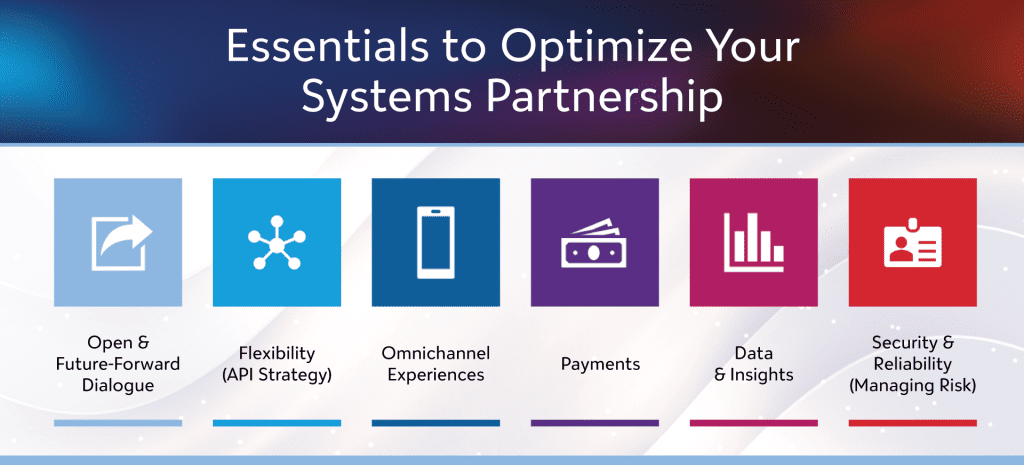
4. Payments
Mike Cardell: You have to view the whole system end-to-end. Payments are a huge part of the value chain. I think lotteries need to start expanding their approach to the system as a larger payment platform for a mechanism to deploy or collect payments, disperse prizes, et cetera. We’re all talking about ease of use. And again, looking at that next generation of players, that’s what they expect.
If you look at all the forms of payments on a macroeconomic level, cash has been king for a long time. However, if you look at The Federal Reserve Payments Study—a three-year study that culminated in 2021—they found that 90+ % of adults in the United States have at least one debit card. If you start looking at the percentage of all U.S. consumers who carry cash daily, it’s considerably lower. Only a small fraction of the 18-35 demographic carries or uses cash for transactions. They’re leaning heavily into virtual wallets, virtual debit cards, and other money movement platforms like Zelle and Venmo.
You’ve got to find a way to make that part of the overall lottery experience responsibly. But we lose the opportunity to capture some players because they don’t carry cash. Many people I’ve talked to since I came to the lottery industry, especially in that 18-35 group, still think lotteries are 100% cash. They say they never buy it in a gas station because they don’t carry cash. Lotteries must find ways to change that paradigm thinking from the player’s perspective. We must make payments a much more fluid engagement cycle.
The other thing to look for when reviewing systems and payment providers is a tech partner who offers a payment platform with no risk to the lottery. For instance, Scientific Games takes on the burden of the payment stream. If there’s a dispute, we take responsibility. We want to make it a seamless experience for the player as well as for the lottery.
5. Data & Insights
Mike Cardell: At the end of the day, it’s all about how we make a better player experience. Consumers have come to almost expect a certain level of personal engagement. They don’t want to hunt and peck for things. For instance, Amazon knows what customers like and offers suggestions, which makes the customers’ experience more effortless.
So, when you look at systems, your partner needs robust data tools. For instance, we use Infuse and our digital Player Account Management (PAM) solution, which allows us to personalize the player’s journey, making the experience more convenient and consistent across every touch point. It goes back to what I said earlier; we need to meet consumers where they want to be on their terms.
6. Security and Reliability (Managing Risk)
Mike Cardell: The last big essential piece is looking for a systems provider who continually invests in security tools. Security threats and the defenses to fight them have evolved exponentially over the last five years.
One of my previous roles was running a managed security offering for the Fintech industry. Just look at the type of attacks that can happen now. There are full nation-states, organized crime and grassroots organizations that fund bad actors. In the security world, you must evolve on a daily basis, and that’s what our world-renowned security experts at Scientific Games are focused on.
A systems partner must also constantly invest and evolve in security, continually improving the tools and methodologies. Relying on how we used to protect our systems five years ago is not going to protect us from threats five years from now.
They also need to protect the entire ecosystem, including all omnichannel touch points: digital, mobile, retail systems, and payment platforms.
Finally, they must take a strategic approach rather than just throwing tools at it. You must orchestrate all the security tools to really have the best defenses for your platform and the lottery.
Infuse™ and Momentum® are trademarks of Scientific Games. ©2024 Scientific Games, LLC. All Rights Reserved.